
A hotel waffle maker with a built-in timer transforms the breakfast experience by removing guesswork and delivering consistent results batch after batch. Whether you operate a busy hotel buffet or a cozy bed-and-breakfast, timer-equipped models ensure every guest receives a perfectly cooked waffle. This guide covers everything you need to know about timer systems, from digital countdown displays to mechanical dials, and how to choose the right model for your needs.
Why Timers Matter for Consistent Waffle Quality
Waffle cooking is a delicate balance of time and temperature. A difference of just 30 seconds can mean the difference between a golden, crispy waffle and one that is either pale and doughy or dark and burnt. Built-in timers eliminate human error by providing a precise countdown that staff and guests can rely on. In high-volume hotel settings, where dozens of waffles are made each morning, consistency is essential for guest satisfaction and operational efficiency.
Without a timer, cooks must rely on visual cues or memory, which vary from person to person and shift to shift. Timer-equipped models standardize the process so that whether a seasoned chef or a first-time guest is operating the waffle maker, the result is the same. This consistency is especially valuable for self-serve breakfast buffets where guests prepare their own waffles.
Types of Timer Systems
Hotel waffle makers with timers come in several varieties, each with distinct advantages. Understanding the differences helps you select the best option for your operation.
Digital Countdown Display
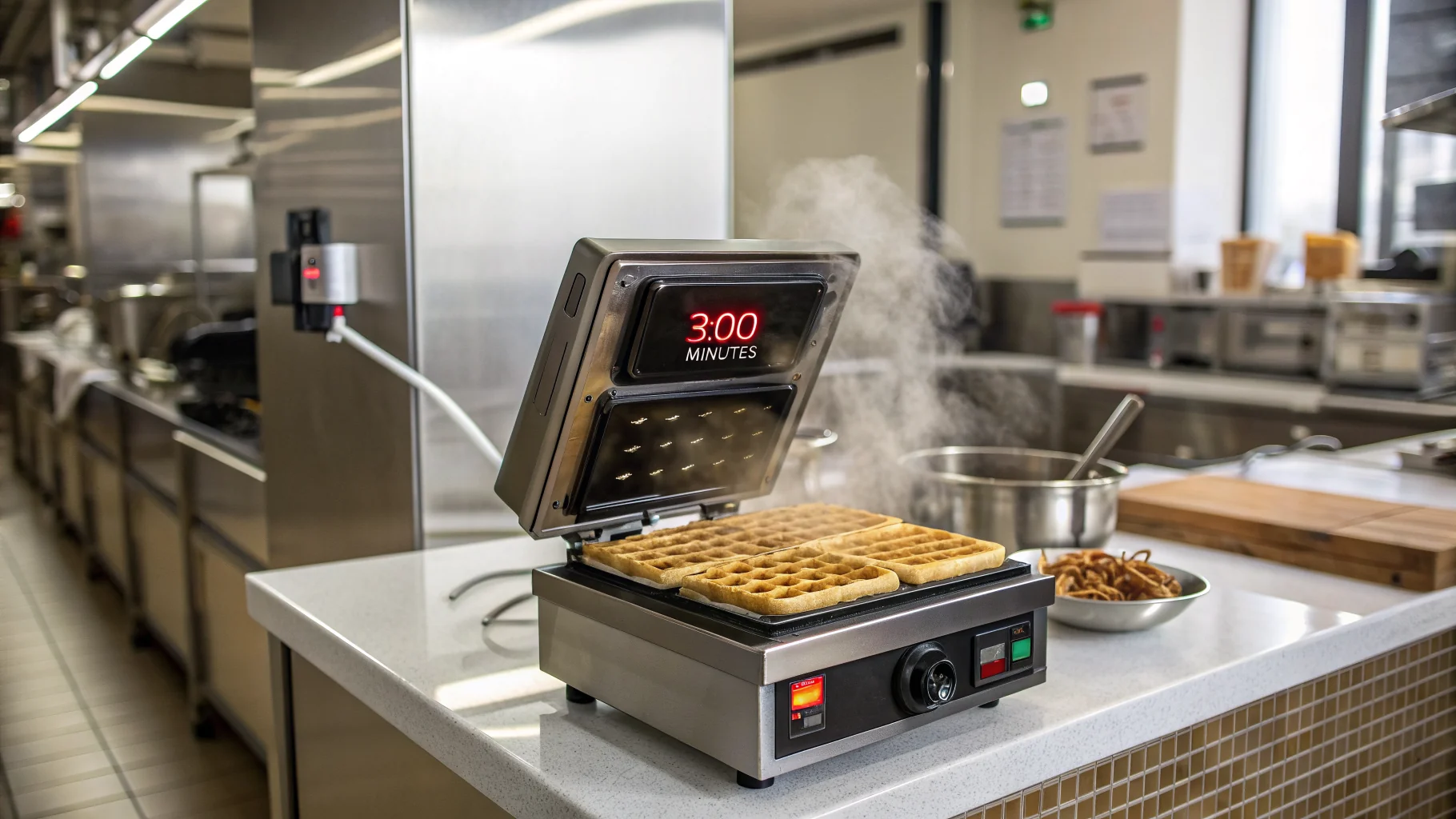
Digital timers show a clear countdown in minutes and seconds on an LCD or LED screen. They typically offer precise control with 1-second increments and are easy to read from a distance. Many digital models automatically start the countdown when the lid is closed, reducing the chance of operator error. These are ideal for commercial settings where multiple people may use the equipment.
LED Display Timers
LED displays are bright and visible even in well-lit buffet areas. They often include color indicators—for example, green when cooking and red when complete—making them accessible for guests who may not be familiar with the equipment. LED timers are durable and perform well in high-humidity kitchen environments.
Audio Alerts
Many timer-equipped waffle makers include an audio beep or chime when the cooking cycle is complete. This feature is especially useful in busy breakfast areas where staff may be multitasking or when guests are distracted. The audible alert ensures no waffle is forgotten and left to overcook. Some models offer adjustable volume or the option to mute the alert for quieter environments.
Mechanical Dial Timer
Traditional mechanical timers use a rotating dial that the user sets to the desired cooking time. They are simple, reliable, and require no batteries or electronics. While less precise than digital options, mechanical timers are often preferred in rugged or high-heat environments where electronic components may be less durable. They are also typically more affordable.
Benefits for Self-Serve Hotel Breakfast Buffets
Self-serve waffle stations are a popular feature at hotels, allowing guests to customize their breakfast experience. Timer-equipped waffle makers make this possible without requiring staff supervision. Guests can pour batter, close the lid, and wait for the timer to signal when their waffle is ready. This reduces the need for trained staff at the station and allows the buffet to scale during peak hours.
For hotel managers, timer models mean fewer complaints about undercooked or burnt waffles and less food waste from discarded batches. Staff can focus on restocking supplies and assisting guests with other needs rather than monitoring each waffle. The result is a smoother, more efficient breakfast service that enhances the guest experience.
How Timers Prevent Overcooking and Undercooking
Overcooking produces waffles that are dark, dry, and sometimes bitter. Undercooking leaves the center raw and doughy, which is both unappetizing and a potential food safety concern. A built-in timer addresses both problems by ensuring waffles are removed at the optimal moment.
Most commercial waffle makers with timers are calibrated for standard batter thickness and typical hotel waffle mixes like Golden Malted. The preset or recommended times are based on extensive testing to achieve the ideal balance of crispy exterior and fluffy interior. Following the timer removes the variability that comes from different batter amounts, ambient temperature, and operator experience.
Best Features to Look For
When shopping for a hotel waffle maker with a timer, consider these key features:
- Adjustable timer range — Look for models that allow you to set cooking times between 2 and 6 minutes to accommodate different waffle types and preferences.
- Auto-start functionality — Timers that begin automatically when the lid closes reduce the chance of forgetting to start the countdown.
- Visual and audio alerts — Both indicators ensure the signal is noticed even in busy environments.
- Easy-to-read display — Large, clear numbers are essential for buffet settings where multiple users may have varying eyesight.
- Durable construction — Timer components should withstand heat, steam, and frequent use. Check our instructions guide for maintenance tips.
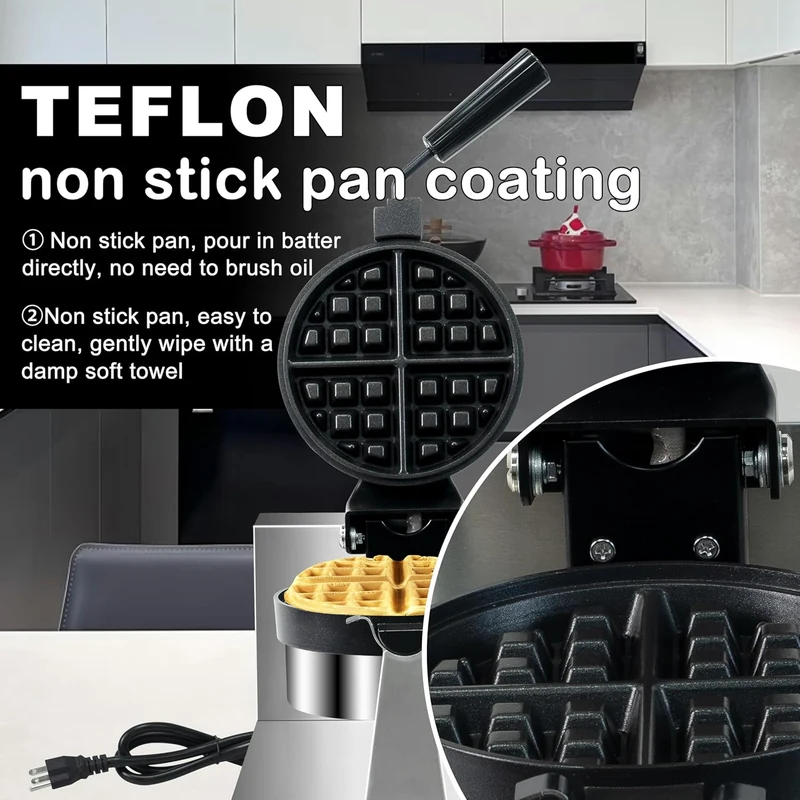
- Non-stick plates — Combined with proper timing, non-stick surfaces ensure waffles release cleanly without sticking or tearing.
Timer Settings and Recommended Cooking Times
Cooking times vary based on waffle type, batter thickness, and desired crispness. The following are general guidelines; always refer to your specific model's manual and the how to use guide for best results.
- Belgian waffles (standard) — 3 to 4 minutes for golden brown, 4 to 5 minutes for extra crispy.
- Thin batter or lighter mixes — 2.5 to 3.5 minutes to avoid overcooking.
- Thick batter or added ingredients — 4 to 5.5 minutes to ensure the center is fully cooked.
- First batch after preheating — May require 30 seconds longer as plates absorb initial heat.
Preheating is critical. Allow the waffle maker to reach full temperature—typically 5 to 10 minutes—before cooking the first waffle. A properly preheated unit will cook more evenly and consistently.
Manual vs Automatic Timer Models
Manual timer models require the user to set the cooking time for each batch. This offers flexibility for different batter types and preferences but demands more attention from the operator. Manual timers are well-suited to settings where staff prepares waffles and can adjust times as needed.
Automatic timer models use a fixed or preset cooking time that starts when the lid closes. They are ideal for self-serve buffets where consistency and simplicity matter most. Guests do not need to understand timer settings—they simply close the lid and wait for the alert. The tradeoff is less flexibility; if you use multiple batter types, you may need to accept a single optimized time or choose a model with multiple presets.
Tips for Using Timer Models Effectively
To get the most from your hotel waffle maker with a timer, follow these practical tips:
- Preheat thoroughly — Always allow 5 to 10 minutes for the unit to reach operating temperature before the first waffle.
- Use consistent batter amounts — Follow the manufacturer's recommended amount; too much or too little batter affects cooking time.
- Do not open the lid early — Peeking interrupts the cooking process and can cause uneven results. Trust the timer.
- Clean plates regularly — Built-up residue affects heat transfer and can lead to uneven cooking. Wipe plates between batches when possible.
- Test and adjust — If your first few waffles are under or overcooked, adjust the timer by 15 to 30 seconds and note the setting for future use.
For nutritional information on waffles, including calorie counts for different recipes, see our calories guide. To find timer-equipped models at discounted prices, visit our sale page for current deals on hotel waffle makers.